
 Part of building the Music Thing Shop is finding 'partners' who'll actually ship the stuff out and take your money. I'd be very grateful for any feedback on buying from these companies:

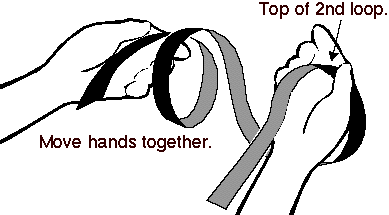 I've always wondered why my cables are all tangled and dangling from a coat hook on the back of my office door. Now I know. I was reading this page about training courses for roadies (or 'stagehands' as they like to be called). It quickly becomes clear that roadies' main issues are: a) Incorrect cable rolling b) Abuse of flight case castors c) Lewd language d) Body odour.
 From Florida artist Onesock, who says: "Material is auralex, the sound dampening stuff found in recording studios. Its all clamped together, will sew later". As one commenter says: "Frank Gehry eat your heart out!". Onesock also does a great line in Cassette Tape Art.
Posted by Tom Whitwell. Story permalink. 1 comments Post a Comment
As part of an effort to rid this site of mobile phone and 'trader blog' advertisments, I'm currently testing my html skills to the limit trying to build a MT online shop to sell the sort of music gear that I'd like to buy myself. It won't be a real shop, but (hopefully) an interesting selection of products which can be bought through other people's shops in the UK, US and Europe. So, if you run a fantastic online shop selling music gear and want to get involved, do get in touch. If you've ever done this sort of thing yourself and have any advice, that would also be very welcome...
Posted by Tom Whitwell. Story permalink. 14 comments Post a Comment
From Florida artist Onesock, who says: "Material is auralex, the sound dampening stuff found in recording studios. Its all clamped together, will sew later". As one commenter says: "Frank Gehry eat your heart out!". Onesock also does a great line in Cassette Tape Art.
Posted by Tom Whitwell. Story permalink. 1 comments Post a Comment
As part of an effort to rid this site of mobile phone and 'trader blog' advertisments, I'm currently testing my html skills to the limit trying to build a MT online shop to sell the sort of music gear that I'd like to buy myself. It won't be a real shop, but (hopefully) an interesting selection of products which can be bought through other people's shops in the UK, US and Europe. So, if you run a fantastic online shop selling music gear and want to get involved, do get in touch. If you've ever done this sort of thing yourself and have any advice, that would also be very welcome...
Posted by Tom Whitwell. Story permalink. 14 comments Post a Comment
 Ken Macbeth is, without a doubt, the most macho synthesizer maker in the world. He's a big Scottish guy with a king's name, who builds huge, expensive synthesizers out of sheet steel and transistors, and uses neat Irn Bru to etch his circuit boards*. His monumental M5 is a £2,000 patch cord and slider covered monster. This is the prototype keyboard version of his MiniMoog inspired M3X2 - all analog, lots of discreet components, MIDI and no patch storage (patch storage is, obviously, for pussies and southerners). Price will be a lot, but not as much as the Moog Voyager - Probably £1-1,500, with the rack version probably slightly less. Initial production will be 25 of the keyboard, 30 of the rack. I can't wait to see one in a box. *Not actually true.
Posted by Tom Whitwell. Story permalink. 14 comments Post a Comment
Ken Macbeth is, without a doubt, the most macho synthesizer maker in the world. He's a big Scottish guy with a king's name, who builds huge, expensive synthesizers out of sheet steel and transistors, and uses neat Irn Bru to etch his circuit boards*. His monumental M5 is a £2,000 patch cord and slider covered monster. This is the prototype keyboard version of his MiniMoog inspired M3X2 - all analog, lots of discreet components, MIDI and no patch storage (patch storage is, obviously, for pussies and southerners). Price will be a lot, but not as much as the Moog Voyager - Probably £1-1,500, with the rack version probably slightly less. Initial production will be 25 of the keyboard, 30 of the rack. I can't wait to see one in a box. *Not actually true.
Posted by Tom Whitwell. Story permalink. 14 comments Post a Comment
 Some musicians find it hard to relax and get with the beat while performing on stage. If you've got a gig coming up, take some time to watch this helpful instructional video. As we know from Armi & Danny's delightful video clip, the Finns are both stylish and rhythmically gifted. (Thanks again, Kati)
Posted by Tom Whitwell. Story permalink. 10 comments Post a Comment
Some musicians find it hard to relax and get with the beat while performing on stage. If you've got a gig coming up, take some time to watch this helpful instructional video. As we know from Armi & Danny's delightful video clip, the Finns are both stylish and rhythmically gifted. (Thanks again, Kati)
Posted by Tom Whitwell. Story permalink. 10 comments Post a Comment
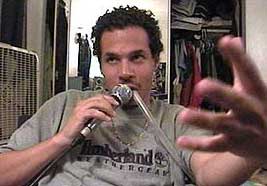 This page is a wonderful account of one man's twenty year quest to build himself a talkbox* to recreate Zapp's 'More Bounce to the Ounce': "The first time I heard that computer voice come out of my mouth, I almost cried tears of joy. I called everyone and explained that I’d finally gotten a Talkbox. Whether they wanted to hear it or not I demonstrated the sound until they either hung up or became irate."
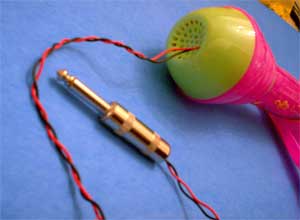 It's all in the headline: here are the instructions. There's also a $115 plate reverb which looks like rather more hard work...
Posted by Tom Whitwell. Story permalink. 8 comments Post a Comment
It's all in the headline: here are the instructions. There's also a $115 plate reverb which looks like rather more hard work...
Posted by Tom Whitwell. Story permalink. 8 comments Post a Comment
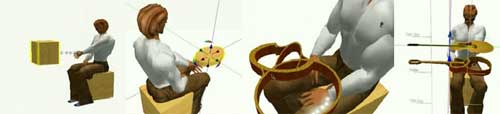 I've never been to Second Life, but - inspired by this Wired feature - I've been trawling the shops for cool music gear. Dissapointingly, I've found no vintage synths (supergeeks will have to make do with this) and rather a lot of new-agey crap. By far the most prolific SL music-gear-maker is Robbie Dingo - you can buy his guitars, percussion kits, pianos, bagpipes and Hyper-Flutes here. A steel drum costs L$120 (40 cents in real money), while a Hyper Flute - which seems to let you create your own music - costs L$3,000 (around $10). Most Second Life instruments are really toys - they'll play a couple of sound loops and animate with your avatar. Some are slightly more advanced: Robbie's 1965 Fender Stratocaster (L$400/$1.40) "loops a funky pattern that can be transposed via the menu system to any key whilst remaining in time". How many guitarists can say the same?
  Robbie (who is British) has a blog about Second Life instrument making. His greatest claim to fame was creating the guitar used by Suzanne Vega when she played a gig in Second Life - as far as I can work out, this is just a prop - she was playing a real guitar into a microphone, whch was beamed into the concert. There's a great video about making the guitar here.
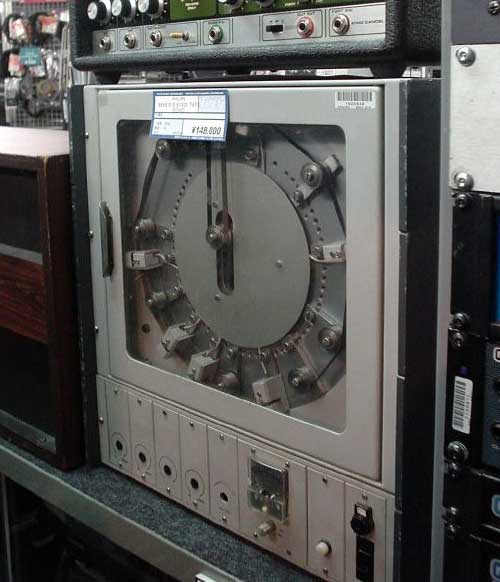 Matrix Synth featured this great story about FiveG, the expensive but goodie-packed Harajuku synth shop (previously linked here). The flickr set from the shop includes this picture of a weird-looking science-lab tape echo machine, making the normally cool Roland Space Echo above it look distinctly mundane. Their price list calls it a Philips Tape Echo (and it's ¥148,000 - £670) Anyone know anything about this unit? If you've got one to sell, I'm sure Goldfrapp want five of them for their next video...
Posted by Tom Whitwell. Story permalink. 17 comments Post a Comment
Matrix Synth featured this great story about FiveG, the expensive but goodie-packed Harajuku synth shop (previously linked here). The flickr set from the shop includes this picture of a weird-looking science-lab tape echo machine, making the normally cool Roland Space Echo above it look distinctly mundane. Their price list calls it a Philips Tape Echo (and it's ¥148,000 - £670) Anyone know anything about this unit? If you've got one to sell, I'm sure Goldfrapp want five of them for their next video...
Posted by Tom Whitwell. Story permalink. 17 comments Post a Comment
 People talk about analogue synths all the time, but there is something spectacularly, primally analogue about eBay item #250038798544, an enormous, monolithic Otari MTR-90 24 track two inch tape recorder from 1987, complete with 24 VU meters and a beautiful NASA-style remote control unit. This one is on eBay for £2,900, which I suspect is
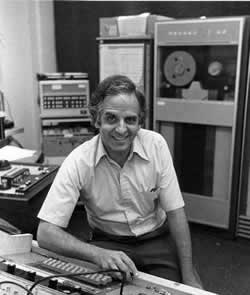 Paul Lansky was one of the first electronic/computer music composers, and he's still a professor at Princeton. Here is his charming account of being sampled by Radiohead. A short loop of his track Mild und Leise [mp3] became the chord sequence for Idioteque. "Mild und Leise was composed in 1973 on an IBM 360/91 mainframe computer. I used the Music360 computer language written by Barry Vercoe. This IBM mainframe was, as far as I know, the only computer on the Princeton University campus at the time. It had about one megabyte of memory, and cost hundreds of thousands of dollars (in addition to requiring a staff to run it around the clock). At that point we were actually using punch cards to communicate with the machine, and writing the output to a 1600 BPI digital tape which we then had to carry over to a lab in the basement of the engineering quadrangle in order to listen to it. It uses FM synthesis, which had just been worked out at Stanford, and also a special purpose filter design program written (in Fortran IV) by Ken Steiglitz. What's especially cute, and also occured to Jonny Greenwood, is that I was about his current age, when I wrote the piece - sort of a musical time warp." Somewhat cooler than hanging about with Radiohead is this short clip of Paul being taught to play the Theremin by... Leon Theremin! (Thanks Martin)
Posted by Tom Whitwell. Story permalink. 6 comments Post a Comment
Paul Lansky was one of the first electronic/computer music composers, and he's still a professor at Princeton. Here is his charming account of being sampled by Radiohead. A short loop of his track Mild und Leise [mp3] became the chord sequence for Idioteque. "Mild und Leise was composed in 1973 on an IBM 360/91 mainframe computer. I used the Music360 computer language written by Barry Vercoe. This IBM mainframe was, as far as I know, the only computer on the Princeton University campus at the time. It had about one megabyte of memory, and cost hundreds of thousands of dollars (in addition to requiring a staff to run it around the clock). At that point we were actually using punch cards to communicate with the machine, and writing the output to a 1600 BPI digital tape which we then had to carry over to a lab in the basement of the engineering quadrangle in order to listen to it. It uses FM synthesis, which had just been worked out at Stanford, and also a special purpose filter design program written (in Fortran IV) by Ken Steiglitz. What's especially cute, and also occured to Jonny Greenwood, is that I was about his current age, when I wrote the piece - sort of a musical time warp." Somewhat cooler than hanging about with Radiohead is this short clip of Paul being taught to play the Theremin by... Leon Theremin! (Thanks Martin)
Posted by Tom Whitwell. Story permalink. 6 comments Post a Comment
 Sp3ccylad writes about MyDreamApp - Pop Idol for geeks. People with ideas for a new software package compete for votes - the winner is produced and marketed. By far the most interesting idea is Richard Whitelock's Whistler - a music application which uses whistling, humming, drumming or clapping as the interface, and can fix timing, quantize notes etc. Seeing as the current front runner in MyDreamApp is Cookbook: "A Mac OS X application that will streamline many kitchen-related activities", I think Whistler deserves our support and votes...
Posted by Tom Whitwell. Story permalink. 8 comments Post a Comment
Sp3ccylad writes about MyDreamApp - Pop Idol for geeks. People with ideas for a new software package compete for votes - the winner is produced and marketed. By far the most interesting idea is Richard Whitelock's Whistler - a music application which uses whistling, humming, drumming or clapping as the interface, and can fix timing, quantize notes etc. Seeing as the current front runner in MyDreamApp is Cookbook: "A Mac OS X application that will streamline many kitchen-related activities", I think Whistler deserves our support and votes...
Posted by Tom Whitwell. Story permalink. 8 comments Post a Comment
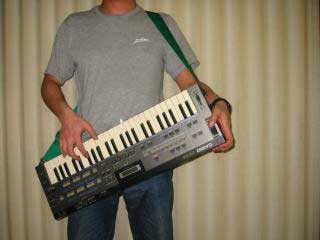 This great article by Madtheory will tell you everything you ever wanted to know about the Casio CZ range of synths, from their origins in a $30,000 computer system called COSMO to the ultimately doomed VZ range, featuring "interactive phase distortion". We had a CZ-101 in my school band, and it's part of the small but wonderful pantheon of 'cool battery-powered synths with mini keys' alonside the Yamaha CS-01, Korg MicroKorg and Yamaha DX100 (Can anyone suggest others?). More CZ-101 memories here at Retro Thing. (Thanks Tyler)
Posted by Tom Whitwell. Story permalink. 38 comments Post a Comment
This great article by Madtheory will tell you everything you ever wanted to know about the Casio CZ range of synths, from their origins in a $30,000 computer system called COSMO to the ultimately doomed VZ range, featuring "interactive phase distortion". We had a CZ-101 in my school band, and it's part of the small but wonderful pantheon of 'cool battery-powered synths with mini keys' alonside the Yamaha CS-01, Korg MicroKorg and Yamaha DX100 (Can anyone suggest others?). More CZ-101 memories here at Retro Thing. (Thanks Tyler)
Posted by Tom Whitwell. Story permalink. 38 comments Post a Comment
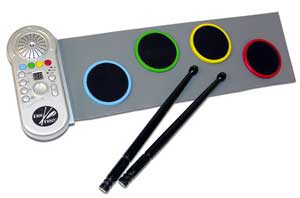 Paul writes to let me know about the Drum Frenzy Portable Roll-Up Style Electronic Drum Pad Set - the follow up to all those roll up keyboards which have moved in phenomenal numbers from gift catalogues to the backs of cupboards over the last couple of years. Drum Frenzy does look more fun, with 32 sounds and various songs to play along with. Unfortunately it doesn't have a MIDI out, and it's presumably not touch sensitive - but a rollable, touch sensitive MIDI drum pad could be quite useful, perhaps?
Posted by Tom Whitwell. Story permalink. 1 comments Post a Comment
Paul writes to let me know about the Drum Frenzy Portable Roll-Up Style Electronic Drum Pad Set - the follow up to all those roll up keyboards which have moved in phenomenal numbers from gift catalogues to the backs of cupboards over the last couple of years. Drum Frenzy does look more fun, with 32 sounds and various songs to play along with. Unfortunately it doesn't have a MIDI out, and it's presumably not touch sensitive - but a rollable, touch sensitive MIDI drum pad could be quite useful, perhaps?
Posted by Tom Whitwell. Story permalink. 1 comments Post a Comment
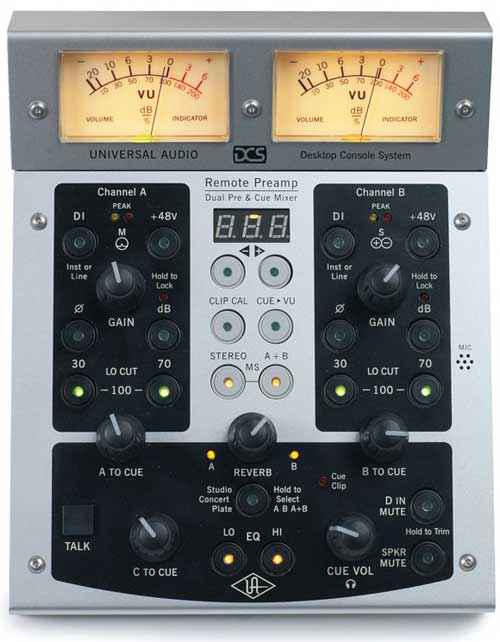 This is Universal Audio's new remote-controlled preamp. There's a half-rack box to leave somewhere discreet, while this exceptionally nice-looking remote sits on your desk, where you can stroke it. It's a stereo mic pre, plus a headphone amp (with reverb and eq for monitoring). Create Digital Music have the full details (or here is the official site). I'm sure it will sound fantastic. No price yet, but expect it to be somewhere between 'lots of monney' and 'a very great deal of money'. Perhaps you should just print out this hires image and stick it to your desk...
Posted by Tom Whitwell. Story permalink. 3 comments Post a Comment
This is Universal Audio's new remote-controlled preamp. There's a half-rack box to leave somewhere discreet, while this exceptionally nice-looking remote sits on your desk, where you can stroke it. It's a stereo mic pre, plus a headphone amp (with reverb and eq for monitoring). Create Digital Music have the full details (or here is the official site). I'm sure it will sound fantastic. No price yet, but expect it to be somewhere between 'lots of monney' and 'a very great deal of money'. Perhaps you should just print out this hires image and stick it to your desk...
Posted by Tom Whitwell. Story permalink. 3 comments Post a Comment
 Different Skies is a
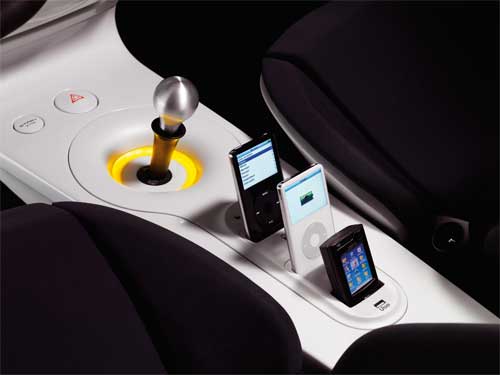 Catering for a slightly ravier customer than the VW Guitar, Module Records Blog reports on the new Renault Twingo concept car, which features not one, not two, but three iPod docks, and a mixing desk built into the dashboard:
"Twingo Concept has found inspiration in youth culture and in its love of music and freedom. The centre console features a USB port as well as sockets for devices like Apple's iPod and the Nokia Smartphone. A mixing deck built into the dashboard is ideal for partying with friends. The musical focus is also reflected in the highly visual graphics of the dashboard, the upper part of which features a pattern based on the graphic equalizer bars with which music-lovers are naturally familiar. It is evocative of the bass rhythms that will pound from the door-mounted speakers and contrasts with the matt finish of the lower part of the dashboard." No, I have no idea what kind of mixing desk might be built into the dashboard. There's a tantalising picture on the Module Records site, but that's it.
Posted by Tom Whitwell. Story permalink. 11 comments Post a Comment
Catering for a slightly ravier customer than the VW Guitar, Module Records Blog reports on the new Renault Twingo concept car, which features not one, not two, but three iPod docks, and a mixing desk built into the dashboard:
"Twingo Concept has found inspiration in youth culture and in its love of music and freedom. The centre console features a USB port as well as sockets for devices like Apple's iPod and the Nokia Smartphone. A mixing deck built into the dashboard is ideal for partying with friends. The musical focus is also reflected in the highly visual graphics of the dashboard, the upper part of which features a pattern based on the graphic equalizer bars with which music-lovers are naturally familiar. It is evocative of the bass rhythms that will pound from the door-mounted speakers and contrasts with the matt finish of the lower part of the dashboard." No, I have no idea what kind of mixing desk might be built into the dashboard. There's a tantalising picture on the Module Records site, but that's it.
Posted by Tom Whitwell. Story permalink. 11 comments Post a Comment
 Here is a tiny, minimal flash sequencer, which should keep you occupied for at least ten minutes. It's a little bit different from this sheep-based online sequencer. When you've finished, you can design some album artwork at jacksonpollock.org. (Thanks, Jon)
Posted by Tom Whitwell. Story permalink. 1 comments Post a Comment
Here is a tiny, minimal flash sequencer, which should keep you occupied for at least ten minutes. It's a little bit different from this sheep-based online sequencer. When you've finished, you can design some album artwork at jacksonpollock.org. (Thanks, Jon)
Posted by Tom Whitwell. Story permalink. 1 comments Post a Comment

 This is the Creative XMod, a little €80 box which plugs into your computer as a soundcard. Their main claim is: "X-Fi module for PC and Mac restores MP3 music beyond studio quality". It's not clear how they perform this wonder, but they say: "The Creative X-Fi Xtreme Fidelity audio processor puts your music and movie audio through a two-step quality enhancement process. First it converts the audio into 24-bit/96kHz quality, then it remasters and selectively enhances the audio by analyzing and identifying which parts of the audio stream have been restricted/damaged during the compression stages to 16-bit and then to MP3. The result is music that sounds cleaner, smoother and has more sparkle, and movies that sound more realistic than ever before!" Could it be a touch of EQ and a compressor, perhaps? Whatever, let's hope that some professional studios buy one quick, so they can catch up, soundwise. (Thanks, Taras)
Posted by Tom Whitwell. Story permalink. 38 comments Post a Comment
This is the Creative XMod, a little €80 box which plugs into your computer as a soundcard. Their main claim is: "X-Fi module for PC and Mac restores MP3 music beyond studio quality". It's not clear how they perform this wonder, but they say: "The Creative X-Fi Xtreme Fidelity audio processor puts your music and movie audio through a two-step quality enhancement process. First it converts the audio into 24-bit/96kHz quality, then it remasters and selectively enhances the audio by analyzing and identifying which parts of the audio stream have been restricted/damaged during the compression stages to 16-bit and then to MP3. The result is music that sounds cleaner, smoother and has more sparkle, and movies that sound more realistic than ever before!" Could it be a touch of EQ and a compressor, perhaps? Whatever, let's hope that some professional studios buy one quick, so they can catch up, soundwise. (Thanks, Taras)
Posted by Tom Whitwell. Story permalink. 38 comments Post a Comment
 VW are giving away a free guitar with every car sold betweeen October and December (in the US only, I suspect). The guitar is made by First Act, an interesting company who got rich selling children's guitars in Wal-Mart. They're very marketing savvy - with a large custom shop churning out one-offs for people like Yeah Yeah Yeahs and Franz Ferdinand. The innovation in the VW guitar (alongside ugly knobs, a seatbelt-themed strap and a VW gang-sign on the headstock) is a built in active analog amp modelling circuit, which I'm guessing works a little like a SansAmp pedal. It means you can plug the guitar straight into your VW car stereo and... well, I'm not exactly sure how you're supposed to play in your car, but that's the idea. The fairly ghastly TV ad featuring Slash is here, and there's more to make your toes curl at vdubsrock.com.
Posted by Tom Whitwell. Story permalink. 32 comments Post a Comment
VW are giving away a free guitar with every car sold betweeen October and December (in the US only, I suspect). The guitar is made by First Act, an interesting company who got rich selling children's guitars in Wal-Mart. They're very marketing savvy - with a large custom shop churning out one-offs for people like Yeah Yeah Yeahs and Franz Ferdinand. The innovation in the VW guitar (alongside ugly knobs, a seatbelt-themed strap and a VW gang-sign on the headstock) is a built in active analog amp modelling circuit, which I'm guessing works a little like a SansAmp pedal. It means you can plug the guitar straight into your VW car stereo and... well, I'm not exactly sure how you're supposed to play in your car, but that's the idea. The fairly ghastly TV ad featuring Slash is here, and there's more to make your toes curl at vdubsrock.com.
Posted by Tom Whitwell. Story permalink. 32 comments Post a Comment
 Thanks to Anonymous, in the comments on this post, for introducing me to the scary and wonderful world of YouTube subwoofer porn. This clip, illustrated above, is a good starting point, proving that life isn't all fun and games when you're dating a fat guy with a pickup and a big sound system. Here is awesome proof that speakers can not only blow out their cones, but catch fire, if driven hard enough. There's more
here and here.
Posted by Tom Whitwell. Story permalink. 22 comments Post a Comment
Thanks to Anonymous, in the comments on this post, for introducing me to the scary and wonderful world of YouTube subwoofer porn. This clip, illustrated above, is a good starting point, proving that life isn't all fun and games when you're dating a fat guy with a pickup and a big sound system. Here is awesome proof that speakers can not only blow out their cones, but catch fire, if driven hard enough. There's more
here and here.
Posted by Tom Whitwell. Story permalink. 22 comments Post a Comment
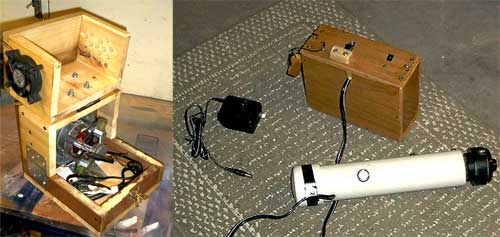 Imagine the situation. You're a noise musician, so you want to play things like vacuum cleaners and garden tools on stage. Your problem? Roadies just don't take you seriously. Connecticut musician Tard has a solution: On the left: "This is an old Lectrolux vacuum cleaner motor put in a DIY wood box. Has a much different (deeper, richer) sound than the original metal vacuum cleaner casing." and on the right: "Just a regular household weed-wacker, BUT... Made a DIY wood box for the rechargable battery and put the motor in a PVC pipe. Added a safety switch so the power has to be turned on AND the PVC button held down at the same time to start. Makes a nice "rackety" dentist-drill whirr." He also has a fantastic guitar pickup in a little box for location noise recording. (Thanks, Cementimental)
Posted by Tom Whitwell. Story permalink. 2 comments Post a Comment
Imagine the situation. You're a noise musician, so you want to play things like vacuum cleaners and garden tools on stage. Your problem? Roadies just don't take you seriously. Connecticut musician Tard has a solution: On the left: "This is an old Lectrolux vacuum cleaner motor put in a DIY wood box. Has a much different (deeper, richer) sound than the original metal vacuum cleaner casing." and on the right: "Just a regular household weed-wacker, BUT... Made a DIY wood box for the rechargable battery and put the motor in a PVC pipe. Added a safety switch so the power has to be turned on AND the PVC button held down at the same time to start. Makes a nice "rackety" dentist-drill whirr." He also has a fantastic guitar pickup in a little box for location noise recording. (Thanks, Cementimental)
Posted by Tom Whitwell. Story permalink. 2 comments Post a Comment
 I've posted in the past about the Latronic Notron, the culty British step sequencer. In one post, I asked: "Can't someone build a software-based Notron Emulator?" Now DSP Audio have released Nortron, a really quite spectacularly complicated-looking software sequencer for OSX, obviously inspired by Darth Vader's toilet seat. Has anyone tried this yet? It's $200, but there is a demo. (via k.e.p on the Electro-Music G2 forum)
Posted by Tom Whitwell. Story permalink. 28 comments Post a Comment
I've posted in the past about the Latronic Notron, the culty British step sequencer. In one post, I asked: "Can't someone build a software-based Notron Emulator?" Now DSP Audio have released Nortron, a really quite spectacularly complicated-looking software sequencer for OSX, obviously inspired by Darth Vader's toilet seat. Has anyone tried this yet? It's $200, but there is a demo. (via k.e.p on the Electro-Music G2 forum)
Posted by Tom Whitwell. Story permalink. 28 comments Post a Comment